
When To Schedule Parking Lot Line Painting
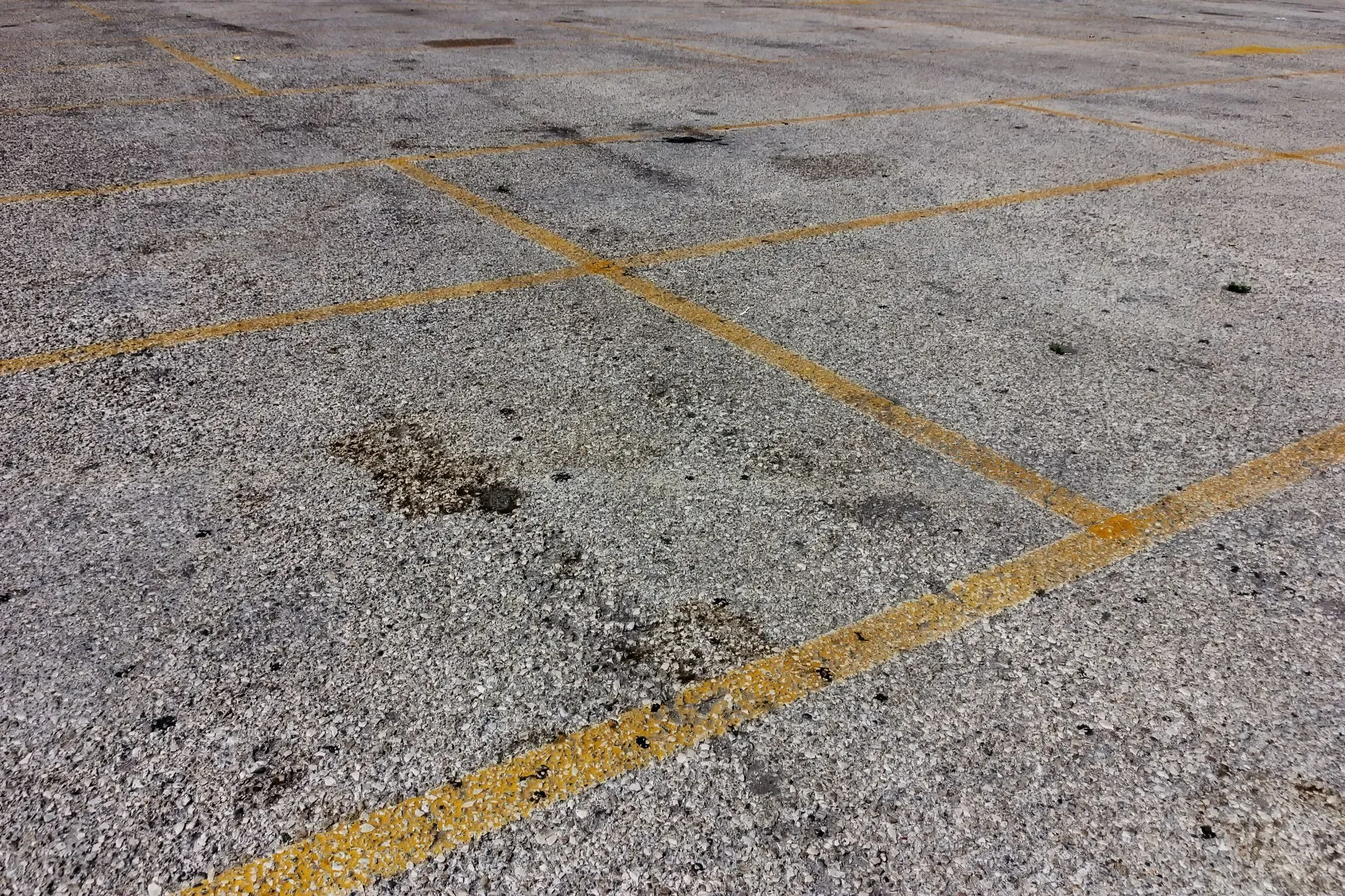
Parking lot line painting should be scheduled before fading makes parking stalls, directional arrows, accessible spaces, loading zones, or restricted areas difficult to identify. The right timing depends on marking visibility, pavement condition, traffic levels, business operations, and a suitable stretch of dry weather. In Calgary, scheduling commonly begins after winter debris is removed and daytime conditions become consistently warm enough for the selected traffic paint. Liam’s Property Care provides line painting for active commercial parking lots across Calgary.
Key Signs Your Parking Lot Markings Need Repainting
Parking lot markings do not need to disappear completely before repainting becomes necessary. Schedule prompt attention when accessible spaces, stop bars, arrows, fire access routes, pedestrian areas, or other priority markings can no longer be identified from a normal driving approach.
Plan repainting in the near term when ordinary stall lines have become broken, low-contrast, or difficult to follow across the parking area. Continued monitoring is reasonable when lines remain continuous and drivers can identify the intended layout without hesitation.
Inspect the lot under the conditions in which it operates. Properties serving evening traffic should review markings under artificial lighting, while all properties should consider visibility in shadow and on wet pavement.
Visibility Loss And Fading Thresholds
There is no universal percentage of paint loss that requires every commercial lot to be repainted. The practical threshold is reached when a driver cannot identify a marking early enough to park, turn, stop, or avoid a restricted area without relying on surrounding vehicles.
Inspect markings from inside a vehicle at the normal approach direction. A marking may still be physically present while providing insufficient guidance because its colour has become similar to the asphalt or its edges have separated into disconnected sections.
Comparing worn areas with a protected section of the same lot can reveal gradual fading. Entrances, turning points, loading areas, accessible spaces, and high-turnover stalls often reach the repainting threshold before markings in lower-traffic areas.
Safety And Traffic Flow Breakdown Indicators
Traffic behaviour can reveal that markings have declined beyond a useful condition. Vehicles parked across stall boundaries, blocked drive aisles, inconsistent traffic direction, or repeated obstruction of loading areas may indicate that drivers no longer understand the intended layout.
Tenant, customer, delivery driver, or maintenance crew complaints should also trigger an inspection. A near miss or recurring parking conflict requires immediate review, even if some paint remains visible.
Faded markings are not always the only cause of poor traffic flow. Snow piles, damaged signs, deteriorated pavement, temporary storage, or an outdated layout may contribute to the problem. Repainting should follow the approved layout unless the property has confirmed that a change is required.
Seasonal Timing For Line Painting In Calgary
Calgary’s most reliable line painting period generally runs from late spring through early fall. The calendar month alone does not determine whether conditions are suitable. Pavement temperature, overnight lows, moisture, humidity, wind, and the forecast during the drying period all affect the available work window.
Late May through June is often practical because winter wear is visible, parking lots have been cleared of accumulated gravel, and warmer conditions are becoming more consistent. Summer and early fall can also provide suitable windows when pavement and weather conditions meet the selected paint’s requirements.
Fresh asphalt, sealcoating, and repaired surfaces may require a curing period before they can be painted. The paving, repair, or coating provider should confirm when the surface is ready rather than allowing the line painting date to determine the curing period.
Temperature Requirements For Proper Paint Adhesion
Both air and pavement temperatures must meet the traffic paint manufacturer’s requirements. Approximately 10°C is a common planning reference for many water-based traffic paints, but it is not a universal approval threshold.
The selected product’s technical data should determine acceptable air temperature, surface temperature, humidity, and rain-free drying time. These conditions must remain suitable for the required period rather than only at the moment work begins.
Pavement can remain colder than the surrounding air during spring mornings. Conversely, dark asphalt can become substantially hotter than the reported air temperature in direct summer sun. Scheduling should therefore rely on surface conditions instead of the forecasted daytime high alone.
Rain, standing water, frost, and morning dew can make an otherwise warm day unsuitable. Excessive wind may also require rescheduling when it creates a risk of paint drift or affects control around nearby vehicles, buildings, and pedestrian areas.
Why Spring And Summer Are Ideal Windows
Spring allows property managers to assess damage caused by snow clearing, winter abrasives, prolonged moisture, and freeze-thaw conditions. Repainting after spring sweeping and required pavement repairs restores the layout before the busiest part of the operating season.
Summer usually provides warmer pavement, longer daylight hours, and more opportunities for the paint to dry under stable conditions. It also provides greater scheduling flexibility for properties requiring evening, overnight, or phased work.
No single month is automatically best for every Calgary property. The preferred window is the first period in which the pavement is clean and dry, required surface work is complete, and conditions are expected to remain within the selected paint’s requirements through drying. Waiting for late fall increases the chance that cold temperatures or early snow will postpone the work until the following spring.
Compliance And Liability Triggers For Repainting
Repainting should be prioritized when faded markings affect accessible parking, traffic direction, loading restrictions, pedestrian routes, or other areas governed by an approved site plan or operational requirement. Property alterations, inspections, tenant changes, and revised traffic patterns can also trigger a layout review.
Parking lot paint is only one component of compliance. Accessible spaces may depend on stall dimensions, access aisles, signs, symbols, and an unobstructed route to the building. In Calgary, designated fire lanes rely on required identification and unobstructed access. Painted curbs or pavement markings may supplement required signs, but they do not replace them.
Repainting an existing approved layout is different from changing that layout. Before altering stall dimensions, accessible access aisles, fire access, traffic direction, or parking capacity, the property owner should confirm the current site and regulatory requirements.
Delayed repainting does not automatically establish legal liability. However, unclear markings can contribute to parking conflicts, blocked access, or unsafe movement. Inspection records, dated photographs, reported concerns, and completed maintenance records help show that deterioration was monitored and addressed.
If a priority marking becomes unclear before suitable painting weather arrives, the property manager should arrange temporary signs, barriers, or traffic controls appropriate to the site. These measures should not be treated as a permanent substitute for restoring required markings.
How Usage And Traffic Volume Affect Repainting Frequency
Repainting frequency should be based on observed wear rather than a fixed calendar rule. Vehicle volume, turning movements, braking, snow clearing, pavement condition, paint formulation, previous application quality, and sunlight exposure all affect service life.
Retail plazas and multi-tenant properties commonly require repainting every one to two years because of frequent vehicle turnover. Moderate-traffic office properties may retain usable markings for two to three years. Industrial lots and loading areas exposed to heavy vehicles may need annual repainting in high-wear sections.
These ranges are planning benchmarks, not mandatory intervals or durability guarantees. Annual repainting is not required across every industrial property, and a lower-traffic lot with aggressive snow clearing may deteriorate faster than a busier property with stable pavement and protected markings.
Entrances, sharp turns, stop bars, loading zones, drive aisles, and stalls closest to building doors should be inspected separately. Repainting these sections may become necessary before the remainder of the lot reaches the same condition.
A spring inspection identifies winter damage, while a later seasonal review can confirm whether heavily used markings are likely to remain legible through the next winter. The observed condition, not simply the age of the paint, should determine the repainting date.
Planning Line Painting Around Business Operations
Parking lot line painting requires controlled access until the markings have dried sufficiently for the area to reopen. Scheduling should account for customer traffic, tenant hours, deliveries, employee parking, waste collection, and emergency access.
The property manager and maintenance provider should establish who is responsible for tenant notices, temporary barriers, vehicle removal, and reopening authorization. Vehicles left in a scheduled section can prevent completion and create the need for a return visit.
Evening or overnight work may suit properties with predictable daytime traffic. However, a quieter operating period is only useful when pavement temperature, dew, wind, and forecast conditions remain suitable.
Properties that cannot close the entire lot can divide the work into phases. Each phase requires a defined vehicle route, temporary parking arrangement, and reopening time. Required emergency access, accessible routes, and essential delivery access must remain available throughout the work.
Tenants, employees, delivery companies, and other regular users should receive advance notice of closures and access changes. The schedule should also account for events, inventory deliveries, move-ins, waste pickup, or construction activity that could interfere with the work area.
A provisional date and backup weather window reduce pressure to proceed during marginal conditions. Rescheduling procedures should include updated access notices so vehicles do not arrive in a section that must remain clear.
Scheduling Parking Lot Line Painting With A Commercial Maintenance Provider
Scheduling should begin with an inspection after winter cleanup, before priority markings reach the point where drivers can no longer use them reliably. Booking a flexible weather window early also provides time to coordinate tenants, deliveries, vehicle removal, and any pavement work.
The inspection should confirm the existing layout, identify sections that need prompt attention, and determine whether fresh paving, sealcoating, or repairs have cured sufficiently. The service date can then be reserved around appropriate surface conditions and business access.
Liam’s Property Care schedules commercial line painting around Calgary weather, parking lot conditions, traffic movement, and operating requirements.
.
